Joint & Regenerative
PRP & Regenerative Medicine
Platelet-rich plasma therapy concentrates platelets from your own blood and injects them into an injured joint, tendon or ligament to support healing. It is used for mild to moderate osteoarthritis and stubborn tendon injuries. Improvement builds over four to twelve weeks. PRP is generally not covered by insurance.
Medically reviewed by Ramya Rangaraj, MD — ABPMR, ABPM
What PRP is, and what it is not
Platelet-rich plasma is made from your own blood. We draw a sample, spin it in a centrifuge to separate out a small volume rich in platelets and growth factors, and inject that concentrate into the injured structure under image guidance.
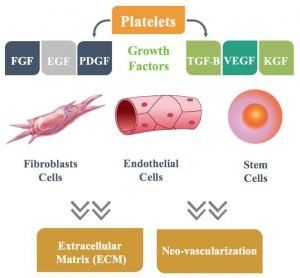
Platelets are the cells that arrive first at any injury and signal repair. The premise of PRP is to deliver a high concentration of those signals to a tissue with poor blood supply — cartilage, tendon, ligament — that has stalled part-way through healing.
We will be straight with you about the evidence. PRP has reasonable support for mild to moderate knee osteoarthritis and for certain chronic tendon problems, and weaker or mixed evidence elsewhere. It does not regrow a joint, it does not reverse advanced arthritis, and it is not a substitute for a needed knee replacement. It is also not a stem cell treatment; we do not market unproven stem cell products.
Conditions we treat with PRP
- Mild to moderate knee osteoarthritis
- Chronic tendinopathy — tennis elbow, golfer's elbow, patellar or Achilles tendon
- Rotator cuff tendinopathy and partial tears
- Gluteal tendinopathy and hip bursitis that keeps returning
- Ligament sprains that have not settled with rehab
- Patients who want to avoid or delay repeated cortisone
The visit, step by step
- Blood draw from your arm — 30 to 60 mL, like a routine lab.
- Centrifuge spin, roughly 10 to 15 minutes, in the office.
- The target area is cleaned and numbed at the skin.
- The PRP is injected under ultrasound or fluoroscopic guidance.
- Short rest, then you go home. Plan about an hour total.
Recovery — expect it to ache first
PRP works by provoking a healing response, so soreness and swelling for three to seven days is normal and expected. That is the process, not a complication.
Avoid anti-inflammatory medication such as ibuprofen or naproxen for about a week before and two weeks after the injection — they blunt the response we are trying to create. Acetaminophen and ice are fine.
Take it easy for 48 hours, then start gentle range of motion. Most patients resume normal walking within a few days and return to loaded exercise at two to three weeks, guided by symptoms.
Timeline and how many injections
PRP is slow. Patients typically notice change at four to six weeks, with continued improvement out to about three months. If you need relief this week, a steroid or nerve block is the better tool — and we will tell you so.
Many joints are treated with a single injection; some protocols use two or three spaced three to four weeks apart. We reassess before adding another injection rather than selling a package up front.
Cost and coverage
Most insurers still consider PRP investigational and do not cover it. We give you the exact self-pay price before scheduling, with no facility fee and no surprise add-ons. If a covered option is likely to help you as much, we will recommend that first.
How the visit works
What to expect
- 01
Consultation with Dr. Rangaraj
You see the physician, not a rotating provider. She reviews your history, examines you, and goes over any imaging you already have.
- 02
A plan you agree to
If a procedure makes sense, you hear what it targets, what it typically does, and what it will cost you before anything is scheduled.
- 03
Procedure day in our office
Procedures are performed in our own suite. There is no hospital admission and no separate facility fee on your bill.
- 04
Follow-up and next steps
We measure the result at a follow-up visit. If something is not working, we reconsider the diagnosis rather than repeat it.